

Life in Houston moves quickly, shaped by busy highways, demanding workplaces, and one of the largest medical communities in the country. With so many people commuting, working in industrial settings, or managing physically demanding routines, injuries can occur when least expected. In the aftermath, individuals are often left balancing medical appointments, missed income, and uncertainty about their future.
During this difficult time, the steps taken to document medical care can play a vital role in protecting both health and legal rights. Clear and consistent treatment records help establish credibility, demonstrate the seriousness of an injury, and provide a reliable timeline of care. The Insurance Outlaw personal injury lawyers work with Houston clients to ensure their medical documentation fully supports their pursuit of fair compensation and long-term recovery.
Documenting the Injury
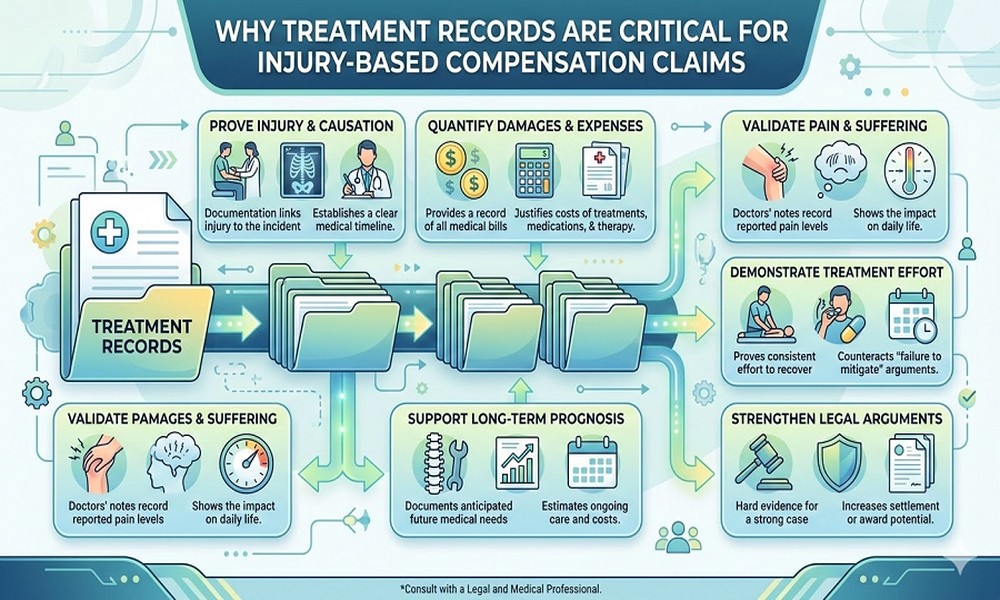
Treatment records are direct proof of a real injury and its extent. These documents are created by doctors during initial assessments, diagnostic tests, and follow-up visits. Without such records, it could be nearly impossible to prove that an injury occurred. A cohesive narrative is created for claim assessors with written reports, imaging, and progress notes. Judges and insurers require these proofs to substantiate claims.
Establishing Causation
It is important to prove that an injury was directly and solely caused by a specific event. The patient’s statement is often included in treatment documents. Doctors write what they see and what they find. It establishes that these elements connect the injury to the specific incident at issue. Failure to obtain the necessary paperwork makes it hard to establish causation, which reduces the claim’s validity.
Tracking Recovery and Treatment
Records prove injury and map recovery. Progress notes, follow-up appointments, and therapy updates demonstrate the fluctuations of the claimant’s condition. These updates show how the person is doing, whether they are doing better, and how much (if at all) they are still struggling. If a claimant documents every step of the way consistently, it shows that they are serious about recovery, which strengthens their case.
Supporting Compensation Calculations
The price tag and length of medical treatment usually determine compensation claims. The treatment records describe every appointment, procedure, and prescription. This is the basis for how direct expenditures are calculated. These documents are used by insurers or courts to project future care needs and the loss of earning potential. These calculations are sound and fair, provided that the records of the writing over the period of time are complete.
Preventing Fraud and Misrepresentation
Proper documentation prevents fabricated or exaggerated claims. Medical experts write symptoms, test results, and treatment plans using an objective voice. Such meticulous documentation prevents claimants from exaggerating their injuries. These documents help insurers and legal practitioners ascertain and authenticate whether the claims made on behalf of or against a person or business are genuine and valid. This mitigates the risks of any fraudulent activity.
Ensuring Timely Claims Processing
Well-structured and properly done documentation simplifies the claim process. Claims with comprehensive treatment records proceed through the system more quickly. This helps both legal and insurance teams to verify crucial information on spot. The common problem of waiting a long time is due to several records being either missed or incomplete. Having a full file aids all parties to the claim in processing it smoothly.
Meeting Legal and Policy Requirements
In many cases, compensation claims have to be established in accordance with the law. Often, regulations require extensive documentation of the injuries, treatments, and expenses. This is where medical records meet the standard, as they provide objective third-party verification. These documents lay the foundation on which legal teams build when supporting their resolve in negotiations or proceedings. Claims could fail to meet essential criteria in their absence.
Encouraging Consistent Medical Care
Treatment documentation is indispensable; it helps claimants prove that they have meticulously adhered to their doctor’s recommendations. Consistency in attending to prompt doctors and maintaining an ideal course of treatment minimizes recovery time. Frequent updates should be recorded as well. It demonstrates the claimant’s willingness to improve and ensures consistency in health outcomes and claim success.
Conclusion
Treatment records form the foundation of compensation claims in injury cases. They serve as verification, provide clear explanations of the injury, and help all parties understand its severity and impact. Thorough documentation supports accurate claim evaluation and promotes fair outcomes. By recognizing the importance of proper medical records, claimants can take steps to protect their rights and strengthen their case. Complete and organized records streamline the claims process and improve the likelihood of receiving suitable compensation

