

In Boca Raton, many individuals manage important parts of their lives online, from financial accounts and investment platforms to personal photo libraries and professional communications. As the community continues to embrace technology for convenience and security, these digital elements have become just as meaningful as physical property when planning for the future. Without proper legal preparation, families may face unnecessary complications when trying to access or manage these accounts during estate administration.
Including digital assets in a comprehensive estate plan helps ensure that valuable information, financial resources, and personal records remain protected and accessible to the right people. Attorneys can guide clients in creating clear legal instructions that reflect modern realities. Professionals at The Siegel Law Group assist clients in addressing these evolving concerns, helping them safeguard their digital presence while providing peace of mind for their loved ones.
Beginning the Probate Process
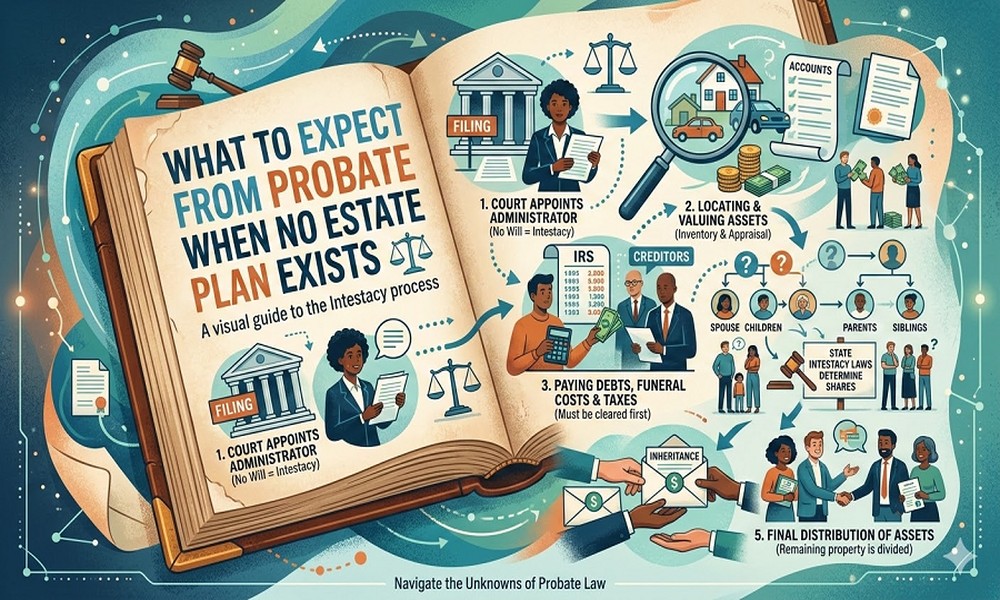
If a person dies without an estate plan, a court will take charge of their remaining property. A petition is typically filed with the local court, often by family members or close friends, to initiate the probate process. A personal representative is then appointed by the court. This representative is usually a close relative of the deceased person, who then takes care of their financial and legal affairs.
Identifying Assets and Debts
A personal representative must identify what the deceased had owned. Assets comprise various things, ranging from property and bank accounts to investments and personal items. In addition to identifying the assets, they must also find out about any debts or obligations. While creating an inventory in the probate process, no items-neither assets nor liabilities-should be ignored.
Paying Debts and Taxes
The personal representative must first pay all remaining liabilities before anything can be passed on to family or other heirs. This includes reaching out to creditors, reviewing bills, and paying legitimate claims. Outstanding taxes, such as income or property taxes, must also be paid off by the decedent. The remaining assets are only to be divided if all obligations of wealth have been settled.
Dividing Assets Under State Law
If there is no will or trust, the assets are distributed according to state laws. These rules-called intestate succession-generally favor spouses, children, and other immediate family members. The details of the lineup and number of shares differ from market to market. If there are no near relatives, friends, charities, or a more remote relative inherits. This process can occasionally disappoint, most importantly those close to you who may have anticipated a different path.
Court Oversight and Delays
For those with no estate plan, probate will likely involve continuous interaction and presence in court. Every step, from the appointment of the personal representative to the approval of distributions, is subject to, if not court approval, then at least court oversight. While this prevents errors, it can lead to significant delays between iterations. Probate, depending on the complexity of the estate and the local court’s schedule, can take months or even longer to complete.
Potential for Disagreements
Without written instructions from the deceased, disputes may arise between family members or other interested parties. Common disagreements include who should serve as personal representative, how assets should be valued, or who should inherit specific items. Sometimes, these conflicts lead to legal battles, which further delay the process and increase expenses. Clear communication and professional guidance can sometimes help prevent or resolve such issues.
Costs and Fees Involved
Probate involves several expenses, such as the costs of filing a court of law, legal services, and fees for the representative. Costs will be incurred, and sometimes assets will need to be depleted so that heirs receive less. The lack of an estate plan leaves plenty of families in difficult financial and emotional situations when their loved ones pass away.
The Importance of Planning Ahead
Probate is about what happens if you do not plan, and having the probate experience opens the eyes of our people to the value of planning. Having a will, trust, or other documents in place can save your family from dragging your estate and affairs through an expensive, lengthy, and uncertain court process. With thoughtful planning, a person can direct who will handle their affairs and how their property should be distributed. This also helps reduce costs and avoid unwanted confrontation.
Conclusion
Even if you have a financial plan, your estate may still have to go through probate, which can mean more steps, added expenses, and potential delays for your loved ones left behind. However, having a plan means there is comfort in knowing that you have done everything possible. Knowing what to expect makes it easier for families to navigate the process and honor their loved one’s legacy.

